
How It Works!
Have you ever wondered how your thermostat actually works? We’d like to help it make sense to you!
In the 3rd edition of this 6-part series, we will talk about how your thermostat works, and what its role in your HVAC system is.
Most people use their thermostat every day—but very few actually know what it’s doing behind the scenes. The good news? It’s much simpler than it sounds. Let’s break it down.
Here’s How It Work!
1) What Is a Thermostat?
The thermostat is the brain of your HVAC system. Its job is very simple – keep your house at the temperature you’ve chosen.
It does this by:
- Reading the Room Temperature
- Inside your thermostat is a sensor that constantly checks the air temperature.
- Comparing current conditions against your settings
- Let’s say you set your thermostat to 72°F for cooling. If the temperature of your home rises to above your chosen setpoint, it tells the AC to turn on. Same goes for heating – Let’s say you set your thermostat to 72° for heat. If the temperature of your home drops below your chosen setpoint → it tells the heat to turn on.
- Sending a signal to your system
- The thermostat sends an electrical signal (usually via low-voltage wiring) to your system: Too warm? → Turns on your cooling. Too cold? → Turns on your heat. Temperature reached? → Shuts everything off.
Why Your System Doesn’t Run Constantly: Because the system is designed to work in cycles, not nonstop.
This prevents:
- Excess energy use
- Equipment wear and tear
- Temperature swings
Once your home hits the desired temperature, the system shuts off until it’s needed again.
Types of Thermostats
Not all thermostats are the same. Here are the most common types:
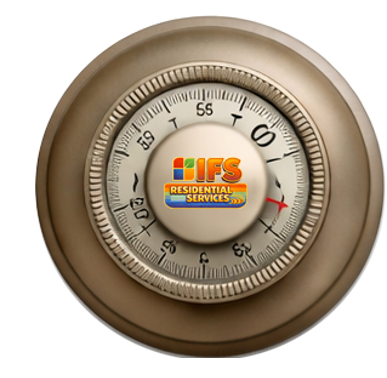 |
Basic (Manual) Thermostats
|
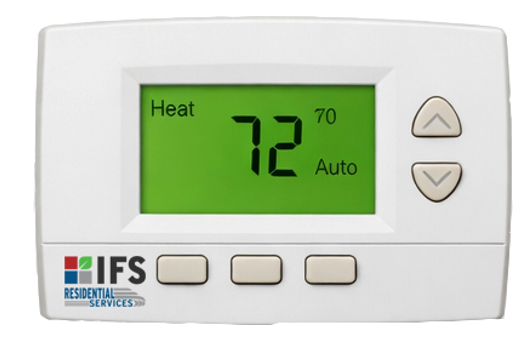 |
Programmable Thermostats
|
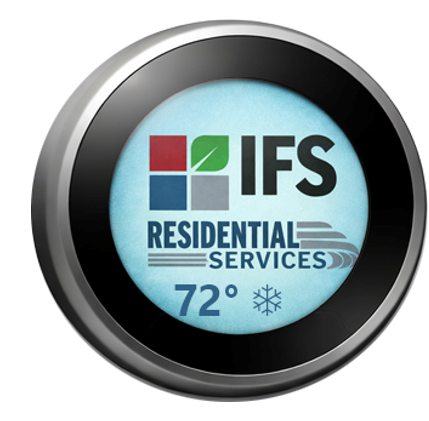 |
Smart Thermostats
|
Where You Put Your Thermostat Matters: Location is more important than most people realize!
A thermostat should be:
✔ On an interior wall
✔ Away from direct sunlight
✔ Away from vents or drafts
If placed poorly, it can:
- Read the wrong temperature
- Cause uneven heating or cooling
- Make your system run too much (or not enough)
Here are some common issues we see frequently:
Cranking the thermostat way down to cool faster. This will work about as well as repeatedly mashing the elevator call button…Unfortunately it doesn’t work that way—your system cools at the same speed. Lowering the temperature will simply require it to run longer to try and hit that setpoint – fairly often we set that number impossibly low, resulting in the system running non-stop, causing even more (often costly!) issues.
Placing heat-generating devices nearby. Always try to keep lamps, TVs, Computers, space heaters, etc. AWAY from your thermostat. The warmth from these items can confuse your thermostat into thinking it is warmer in your home than it really is. In the summer this causes your system to run too much, in the winter, it can keep it from running enough!
Constantly adjusting the temperature. This can cause inefficiencies, and excess strain on your equipment!
When to Upgrade Your Thermostat
It might be time to upgrade if:
- Your home feels uneven in temperature
- Your system runs more than it should
- You want better energy efficiency
- You’re still using an older manual thermostat
A newer thermostat—especially a smart one—can improve:
- Comfort
- Energy savings
- System performance
Final Thoughts:
Your thermostat may be small, but it plays a big role in your home comfort.
It is constantly working in the background to:
- Keep your home comfortable
- Manage your energy use
- Protect your HVAC system
When it’s working properly—you shouldn’t have to think about it at all.
If your system is not working the way you’d expect, your thermostat could be the culprit. Not sure if your system is running properly? Call IFS Residential, and schedule an appointment with one of our Home Comfort Experts!
Call or email for service today! 636-680-2100 residential@intfs.com