Have you ever wondered why the air in your house “feels stale”, “smells musty”, or you see more dust on your surfaces than usual? Your HVAC system plays a much bigger role in the quality of the air inside your home than many people realize, and we’d like to help it make sense to you.
Most homeowners think exclusively about temperature when it comes to comfort — keeping the house cool in summer and warm in winter. But there’s another important factor that often gets overlooked: The quality of the air inside your home.
The average person spends a significant amount of time indoors; whether it’s working from home, sleeping, or spending time with loved ones. The air inside your home can sometimes contain more pollutants than the air outside. Dust, pet dander, pollen, mold spores, various other allergens, bacteria, Volatile Organic Compounds (VOCs) and even excess humidity can all affect your indoor air quality (IAQ).
The good news? Your HVAC system can play a major role in improving the quality of the air your family breathes every day!
Signs Your Indoor Air Quality May Need Attention
Poor indoor air quality can show up in ways homeowners might not recognize right away. Some common signs include:
- Excessive dust buildup
- Seasonal allergy or asthma flare-ups
- Musty odors
- Uneven humidity levels
- Dry skin or irritated eyes
- Increased static electricity during winter
- Stale or “heavy” air
If any of these sound familiar, your home may benefit from an IAQ evaluation.
What Causes Poor Indoor Air Quality?
Several factors can contribute to unhealthy indoor air, including:
- Dirty Air Filters
- Your HVAC filter is your home’s first line of defense against airborne particles. A clogged or low-quality filter can allow dust and allergens to circulate throughout your home.
- Poor Ventilation
- Modern homes are built tighter than ever for energy efficiency — which is great for utility bills, but can trap contaminants indoors.
- Humidity Problems
- Too much humidity can encourage mold growth, while air that’s too dry can cause discomfort and respiratory irritation.
- Pet Dander & Allergens
- Even our favorite furry family members can contribute to airborne particles in the home.
- Household Chemicals
- Cleaning products, paints, candles, and air fresheners can release Volatile Organic Compounds (VOCs) into the air. VOCs are chemicals emitted by many household products; These chemicals can irritate the respiratory system and, over time, contribute to more serious health issues.
How Your HVAC System Helps Improve IAQ
Your heating and cooling system does much more than control temperature. With the right equipment and maintenance, it can dramatically improve your home’s air quality.
- Regular Maintenance
- Routine HVAC maintenance helps keep your system clean, efficient, and operating properly — which directly impacts air quality.
- High-Quality Air Filters
- Upgrading your filter can help capture smaller particles like pollen, dust mites, and pet dander.
- UV Light Systems
- UV lights installed within your HVAC system can help reduce biological contaminants like mold and bacteria
- Electronic Air Cleaners
- These systems help remove airborne particles that standard filters may miss.
- Humidifiers & Dehumidifiers
- Whole-home humidity control helps maintain a healthier and more comfortable environment year-round.
Simple Things Homeowners Can Do Right Now
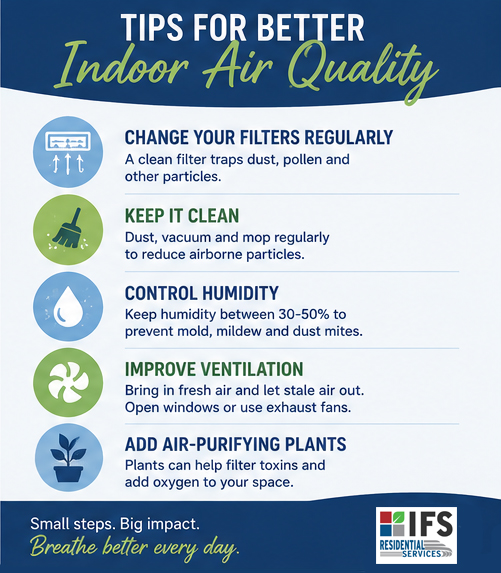
Improving indoor air quality doesn’t always require major upgrades. Here are a few simple steps homeowners can take today:
- Change HVAC filters regularly
- Keep vents and registers clean
- Vacuum and dust frequently
- Use exhaust fans while cooking or showering
- Avoid blocking airflow with furniture
- Keep humidity levels balanced
- Schedule routine HVAC maintenance
- Breathe Easier with Help from the Pros
Indoor air quality isn’t just about comfort — it’s about creating a healthier home for your family!
At IFS Residential Services, we help St. Louis homeowners evaluate and improve the air inside their homes with professional HVAC maintenance and indoor air quality solutions tailored to their needs.
Whether you’re dealing with allergies, excessive dust, humidity issues, or simply want cleaner air, our team can help you find the right solution.
Call IFS today at 636-680-2100 or email residential@intfs.com to learn more about improving your home’s indoor air quality!