
 Have you ever wondered why your home sometimes has a hard time staying comfy?
We’d like to help it make sense to you!
In this first edition of this 6-part series, we will talk about heat load, vs heat loss, what it means, and how it impacts your comfort (AND your wallet!)
When it comes to keeping your home comfortable, there are two important concepts working behind the scenes:
Heat Loss (in the winter) and Heat Load (in the summer). Let’s break them down in simple, real-world terms.
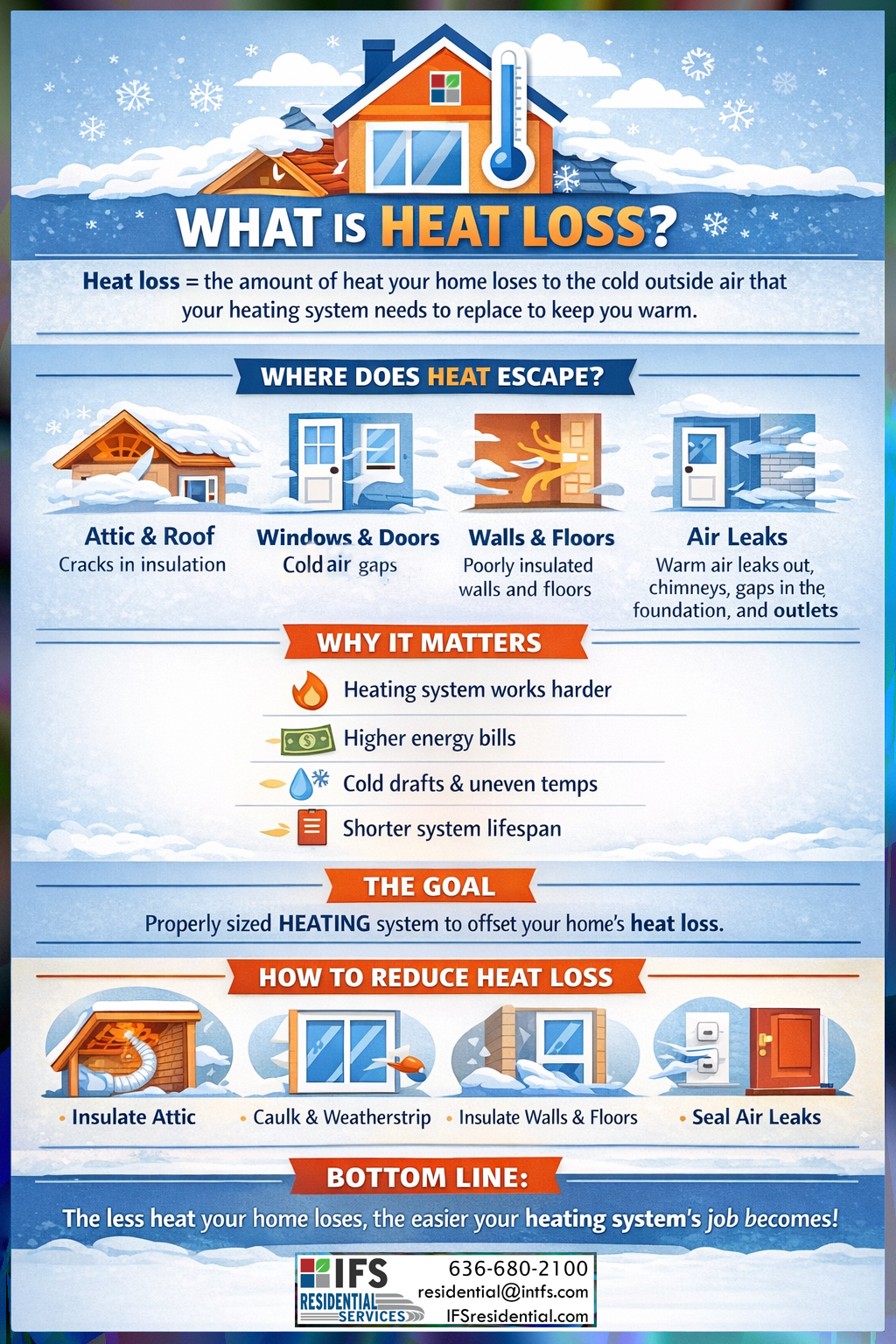 What Is Heat Loss?
Heat loss happens during cold months:
The warm air inside your home escapes to the colder outdoors through heat transfer; (which is defined as thermal energy [Heat] naturally moving from warm to cold), so in winter your home is constantly losing heat through; windows and doors, attic and roof, walls and insulation gaps, floors and crawl spaces, leaky ductwork etc.
What that means for you:
Your furnace runs longer to keep up, some rooms feel colder than others, drafts become more noticeable, and energy bills go up.
What Is Heat Load?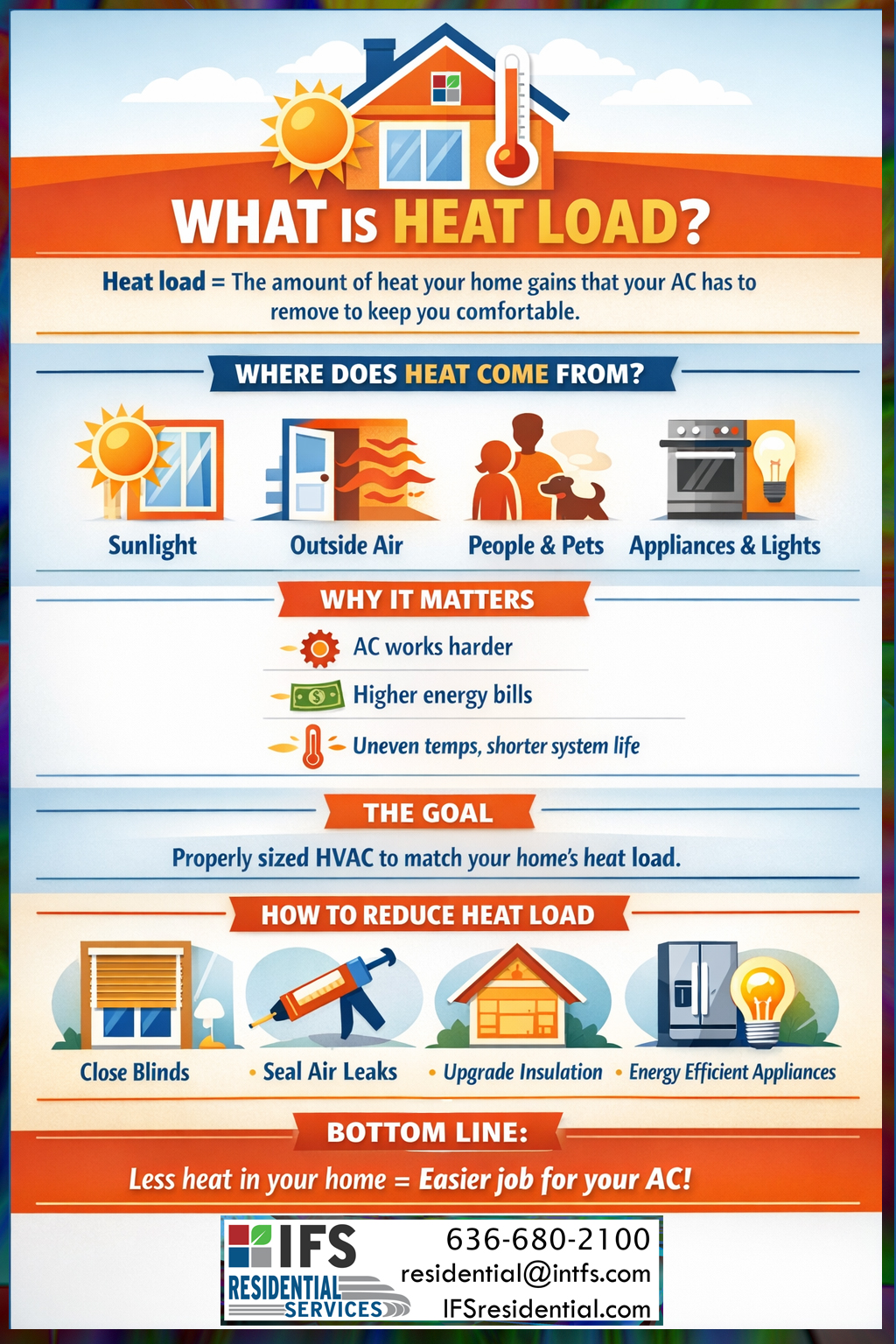
Heat load is the opposite problem—and it happens in the hot months:
Heat load is the amount of heat entering your home that your AC then has to remove.
This heat comes from several sources:
- Sunlight through windows
- Hot outdoor air leaking inside
- Heat from people, appliances, and lighting
- Poor insulation allowing heat in
What that means for you:
Your AC runs longer and harder, your home may feel humid or sticky, certain rooms, (especially upstairs) feel hotter, cooling costs increase
Heat Loss vs. Heat Load — What’s the Difference?
Think about your morning coffee: If you pour it in an insulated travel mug, it will hold its temperature a lot longer than a paper coffee cup will. The travel mug is made with layers of insulation to keep the heat where it belongs!
Your home is similar; It should have multiple layers of insulation to keep your home holding its temperature.
Your HVAC system’s job is to:
Replace lost heat in winter, and remove added heat in summer
If either one is too high, your system will work overtime, causing excess wear and tear on the equipment.
What Causes High Heat Loss & Heat Load?
Many homes—especially older ones in the St. Louis area—deal with both issues due to:
Aging or insufficient insulation, drafty windows and doors, air leaks in attics, basements, and ductwork, poorly sealed or unbalanced duct systems.
How to Improve Comfort Year-Round
The goal is simple:
Keep the heat inside when you want it there, and outside when you don’t.
What helps:
Sealing air leaks and drafts, improving insulation (especially in the attic), maintaining your HVAC system regularly (636-680-2100), evaluating ductwork for leaks or inefficiencies, upgrading older windows if needed.
To Summarize; Heat loss makes your home colder in winter, Heat load makes your home hotter in summer
Both directly impact your comfort, system performance, and energy bills.
If your home struggles with hot rooms in the summer or cold spots in the winter, call IFS Residential today! it may be time to evaluate your heat load and heat loss—not just your HVAC equipment.
636-680-2100
residential@intfs.com